Betta Diseases & Conditions
Posted: Fri Sep 05, 2025 2:44 pm
Fish Diseases & Conditions
I’m going to add some common fish diseases and conditions with a description of each and ways to treat.
At the bottom I’ll also add some instructions of how the meds are used and some useful medications to have on hand for a first aid kit.
 Pop Eye
- This is a disease that can be caused due to an injury or a bacterial infection.
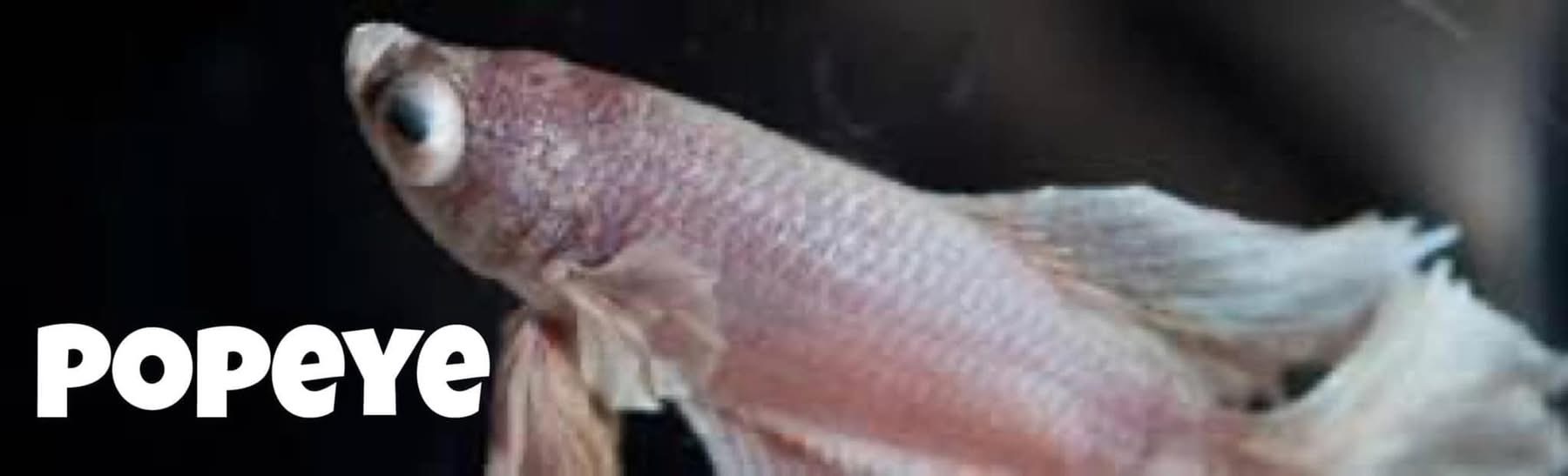
- Symptoms are swollen and bulging eyes, this is caused by excess fluid being accumulated in the area. It can affect one or both eyes.
- This can be a tricky condition to treat because it’s not just one factor that is wrong, there are multiple for example damage to the eye, bacterial infection and swelling from the excess fluid.
Treatment.
- Myxazin to treat the bacterial infection as this is a broad spectrum medication.
- Epsom salt bath as this will help reduce the swelling.
- Methylene Blue bath is also a good medication to help as this kills all bacteria.
Torn Or Nipped Fins
- You will see that their fins can have little rips in them, which can make them look jagged.
- Can be caused by sharp decoration in the tank, such a hard rocks or wood or plastic plants, or even being sucked into filter intake.
- Can also be caused by them nipping them themselves. They can have a tendency to do this when stressed or when their fins become heavy as this can lighten the load for them.
- Can also be from tank mates nipping at them.
Treatment
- The best treatment is clean water so while healing fins it’s best to do 50% water changes twice a week.
- Add tannins into the tank as these have antibacterial and anti fungal properties and helps speed up healing. Tannins can come from alder cones or Indian Almond Leaves (IAL) and various other botanicals. It is best to make a tea solution as this is a higher concentration of tannins than you would get by just adding the cones or leaves into the tank. The easiest way to make a tea is by popping a cone or leave into a 2L jug and fill with boiling water and leave overnight. This liquid can then be added into water changes, I usually use 1/3 of the liquid each change.
- If tank mates are the issue then it’s best to re home one of them as it will continue and progressively get worse, fin damage can lead to fin rot or a bacterial infection if left untreated.
- You can add plenty of resting places throughout the tank especially near the surface if they are nipping their own fins as they can rest when they feel their fins are heavy.
Fin Rot and Body Rot
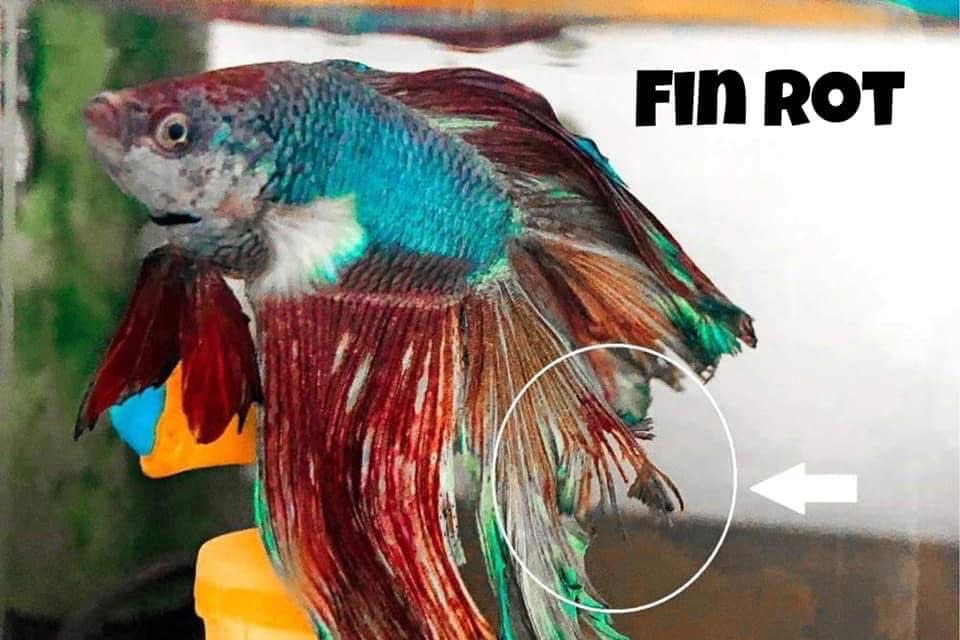
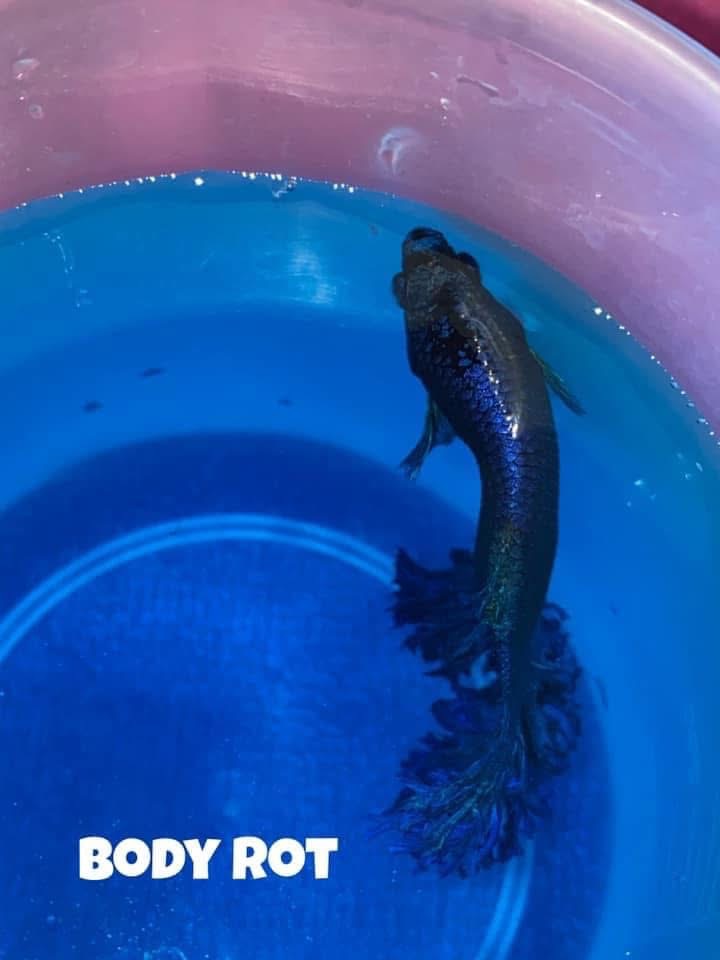
- This is a condition that can often be mistaken for torn fins but what can happen is the fins being torn can be the initial symptom but if water isn’t maintained to be really clean, or the fish is stressed then it can develop into rot.
- It can also be caused by unstable water parameters where the fish has been exposed to ammonia or nitrite.
- Can be caused by having your water too cold. They do far better at temperatures of 28 degrees.
- Stress can also cause fin rot and also a weakened immune system.
- The edges of the fins can look white and fluffy and on some occasions can appear black.
- You may also notice chunks of the affected fins falling off.
- Some will also have red irritated looking sores or bleeding from it.
- Some fishes will have their fins all clumped together like they’ve stuck there.
- Treatment is so important to do quickly as a bacterial infection can set in really fast and the rot can also develop to the body and causing this to also rot.
- You may have a betta who becomes less active and unwilling to eat.
Treatment
- Myxazin as this will help treat the fin/body rot and any secondary bacterial infection.
- Methylene Blue baths can also help as this also kills any bacteria and fungus and will give them a detox if the fin condition has been caused by poor water quality.
- Increase temperature to 28 if it’s too low.
- Try and pin point any stressors for them for example tank mates who are nipping or upsetting the Betta. If you remove the stress source then you can prevent him from becoming as stressed again.
- A weakened immune system can just be an issue that they have but factors like improper diet and low temperatures can cause the immune system to weaken. So you want to ensure that they are on a good quality pellet which is high in protein with no fillers, a good one is fish science betta granules and you also want to ensure that you are also offering live or frozen foods such as brine shrimp, blood worms, black worms, mosquito larvae, daphnia, and tubifex. This is important because they are insectivores so they require this supply of food to maintain their health. They can’t survive alone on a pellet food.
White Spot (Ich)
- This can be as the name indicates as white, raised spots all over the fish. If you look close it’s like actual grains of salt so can easily be identified.
- You may see your fish swimming erratically and or rubbing themselves over tank decor to scratch themselves, scratching can then cause them to break the scales which can then develop into a bacterial or fungal infection.
- This is a parasite which is believed to be found in every tank however it’s opportunistic where fish have a weakened immune system or are stressed they can increase in quantity and feed of the fish and then is apparent as the white spots. These parasites can be brought in by other fish and tank decoration such as rocks, gravel, plants.
Treatment
- Protozin which will kill the parasites and it also contains malachite green which helps with secondary bacterial infections.
Or you can use:
- Esha Exit which will kill the parasites and also run it along with a course of Esha 2000 and this will treat any secondary fungal or bacterial infections. Normally it’s recommended not to mix medicines but these 2 are both designed to be safe to work well with each other.
- The first thing is to maintain some parameters from PH, temperature or spikes in ammonia etc as this can stress the fish which then can lead to white spot.
- Maintain clean water so that the quality is good.
Velvet
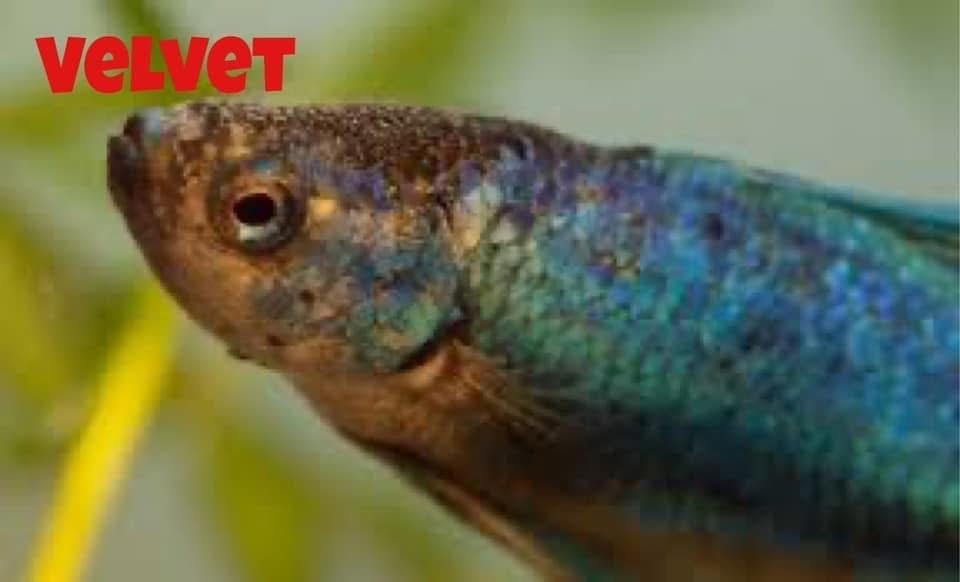
- This is a parasite but can be harder to detect before it becomes quite advanced. Some symptoms can include clamped fins and erratic swimming. The parasite feeds of the fish.
- It’s most commonly detected by turning the tank lights off and shining a torch over the fish, if they have velvet it can look like a dusting of gold over them.
Treatment
- Waterlife Protozin or Esha exit kills this parasite. Paraguard is also a great medicine but there are some issues getting this within the UK at the moment.
- This particular parasite thrives in light so it’s best to turn your tank lights off.
Worms
- The initial signs of a worm issue is the fish looking quite skinny and unable to gain weight and or a lack of appetite.
- You can also see white stringy poop.
Treatment
- Esha NDX as this kills the worms.
Columnaris
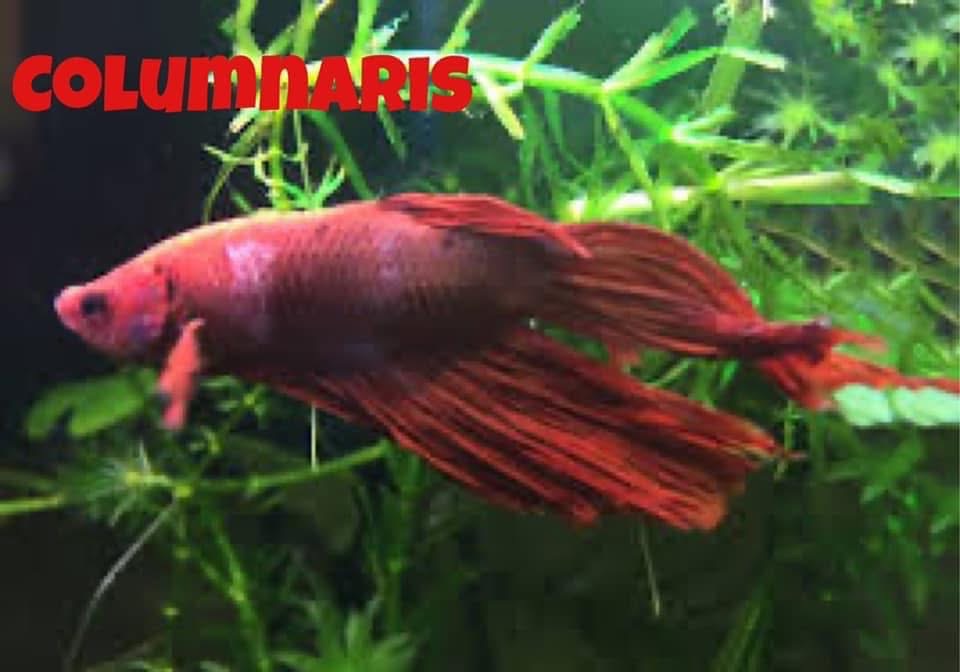
- This is a bacterial infection. This disease is brutal and can wipe out a whole tank.
- Symptoms include white or grey patches around the gills, fins or head.
- It can appear at the early stages as a lighter duller patch of scales so people don’t usually relate it to columnaris but as it progresses it appears more like yellow or brownish patches and at times red lesions.
- The patches can appear by the dorsal (top) fin and then grow down either side of the body giving the appearance that it looks like a saddle.
- It can appear on the mouth looking almost like cotton wool but as it progresses it can start to eat away at the tissue.
- The fish can contract this disease due to a number of factors such as being stressed due to poor water quality, poor diet or even stress from shipping.
- This disease is super contagious and can wipe out every tank even from shared equipment such as nets and siphons.
Treatment.
- Myxazin as this treats the bacterial infection.
- Not all fish can come back from this.
Bloat
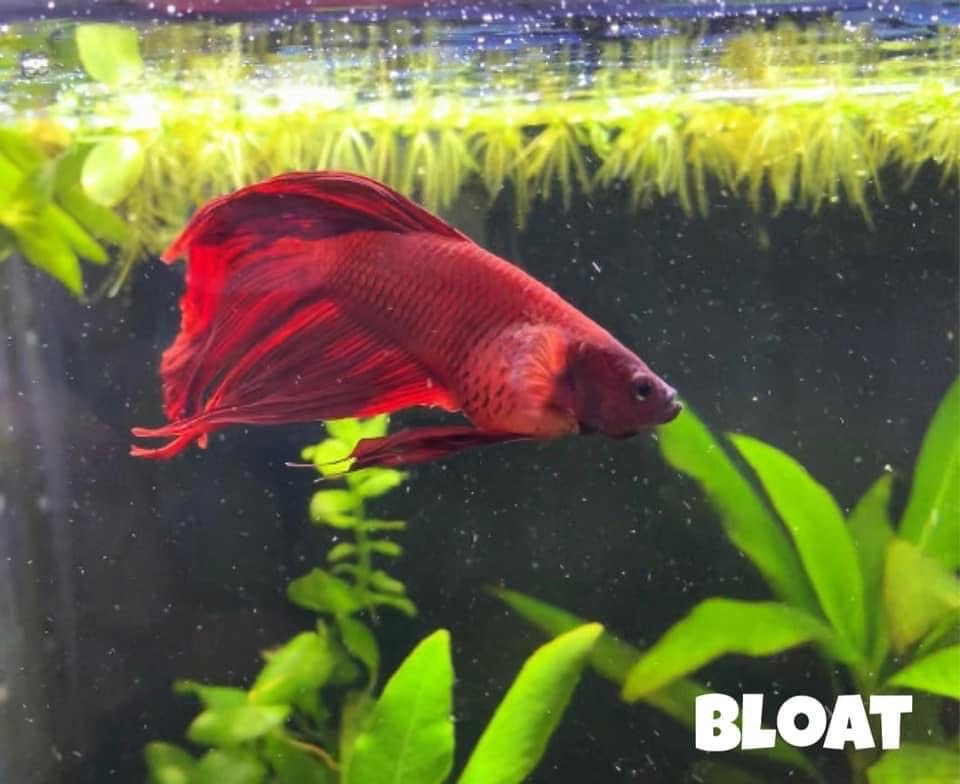
- This can be due to over feeding. Betta have a small digestive tract so they only need smaller quantities of food.
- This can also be caused by pellet foods which contain fillers such as wheat. These tend to expand and fill the fish up.
- It can also be caused by feeding flake food as they gulp lots of air trying to suck the flake up.
Treatment
- Don’t over feed your fish, just feed small quantities once to twice a day until you see a nice rounded tummy.
- Avoid foods with fillers, a great pellet food with no fillers is fish science betta granules.
- Don’t feed blood worms too often.
- Withhold food for a few days to let them digest the food they have.
- If they are constipated then after withholding food for a few days you can offer daphnia as it works as a good laxative for them, you can also flare them as this can also help get their bowels moving.
- Do not offer peas as betta are insectivores and their digestive system is not designed to handle these.
- In extreme cases Epsom salt baths can also help relieve them but I’d only offer this as an option if you’ve tried all of above first.
Swim Bladder Disorder
- Symptoms of this is your betta becoming quite lethargic.
- They might have issues staying upright as they may be tilting to the side.
- They may also be stuck vertical and can’t right themselves into a horizontal position.
- They may have trouble swimming and can have a tendency to fall down to the bottom and shuffle around rather than swimming.
- This condition can be caused in younger fish who haven’t properly developed their swim bladder.
- It can also be caused by overeating.
- Another cause can be a bacterial infection.
Treatment
- The first thing to do when your fish is struggling with this condition is tub then in fresh dechlorinated water of a similar temperature and then float them on the tanks surface. This allows them to rest while easing pressure from their swim bladder. It also means they don’t have to exert themselves when they’re having issues swimming.
- You want to assess them to try and determine what can be causing the issue. Now this can be difficult as we don’t really know what’s going on internally but the first step would be withhold food for a day or 2 to see if it’s simply just been over feeding. After this period you can release them back into the tank to see whether they’re managing better after having a rest period.
- If withholding food hasn’t done the trick and it’s a young fish then the chances are it is a defect with their swim bladder developing properly so the best thing is lower the water level in the tank and this means that they don’t have as far to swim for coming to breathe air. They should manage absolutely fine if this is the case.
- The last option could be that it is a bacterial infection that has caused the issue if this is an older fish that has had no issues before then you can run a course of myxazin to help incase it is a bacterial infection and if that doesn’t help then lower the water level so they can still manage to get air in a shallower tank.
- This condition is manageable in most fish affected. There will be the rare occasion where this isn’t the case and if they’re suffering you may have to euthanise in extreme cases.
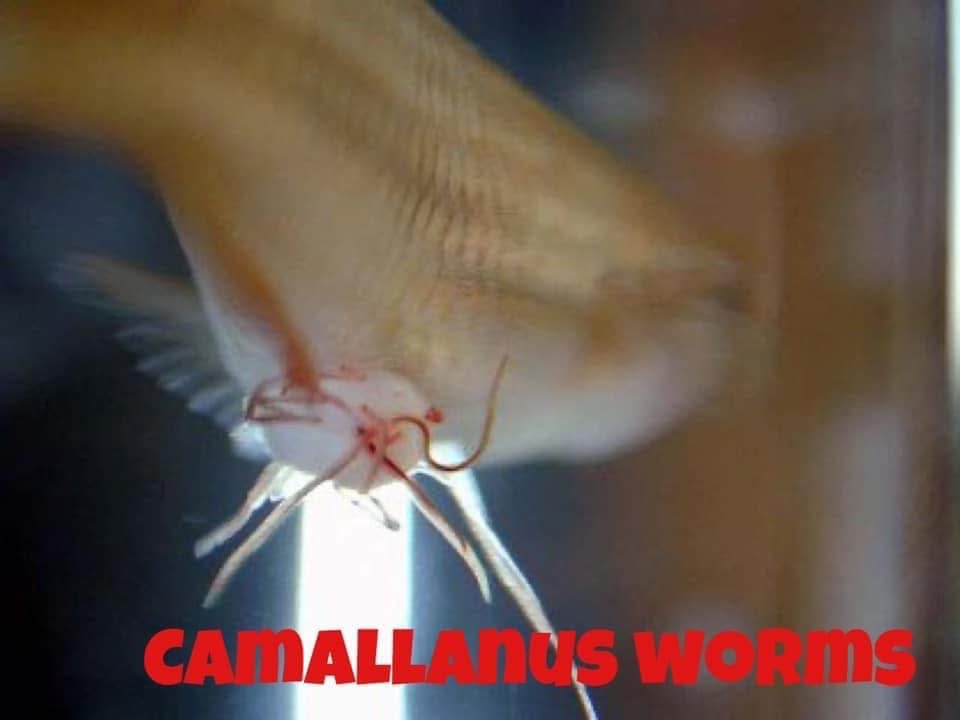
Camallanus Worms
- Symptoms are red worms hanging from their anus.
Treatment
- This can’t always be cured as the worms can be resistant, but Esha NDX can be used to try and kill off the worms.
Dropsy
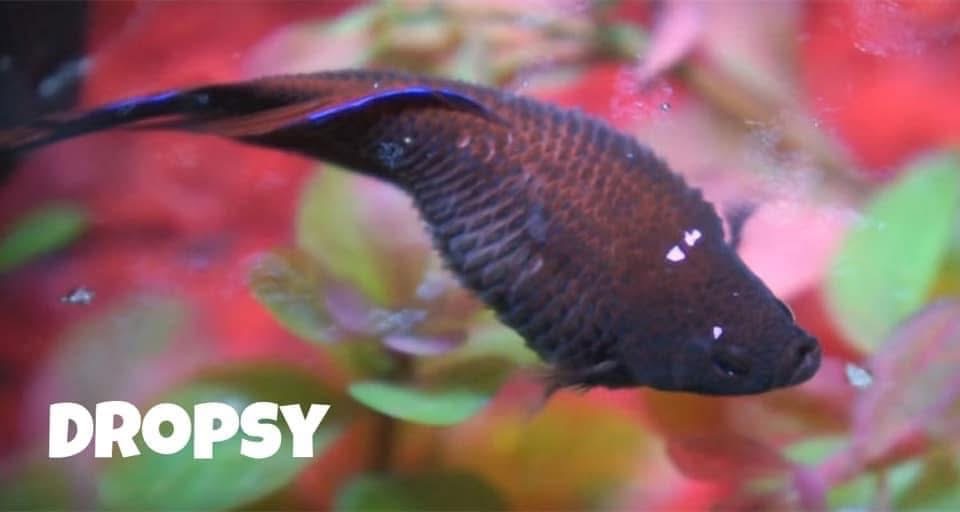
- So although I’m including this here I have to note that dropsy isn’t a disease in itself it’s just a symptom to other issues that are going on.
- Symptoms of dropsy are swelling of the body with protruding scales that look like a pine cone, this is caused by the liver or kidney not functioning properly so effectively the organs are failing.
- They can become lethargic and remain stationary on the floor of the tank. They can also just hang out at the water surface not moving.
- Some may have issues keeping themselves up from the floor.
- Dropsy can stem from a bacterial infection, this can be caused due to stress factors such as poor water quality and unstable tank parameters.
- It can also be caused by a liver or kidney issue which means they are struggling to process the fluids within the body.
Treatment
- There is no cure for dropsy unfortunately because it’s organ failure. Like a human who’s organs fail would need a transplant it’s the same for fish however the option to transplant is not available.
- When dropsy gets to the extreme swelling and protruding scales the organs inside are being all moved aside by the excess fluid and it’s not a pleasant experience for them.
- The best treatment for dropsy is unfortunately euthanasia as sad as that is but this is the kindest thing to do to end their suffering.
- On some rare occasions Epsom salt baths and a course of myxazin can help with the swelling and bacterial infection. I must note that this is only a bandaid because the fish will still have an underlying condition that makes them poorly and nothing reverses organ failure.
- I will include a note below on euthanising.
IMPORTANT NOTE TO ADD IS IF YOUR TANK FILTER RUNS WITH CARBON OR PURIGEN, ZEOLITE OR UV THEN THIS NEEDS TO BE REMOVED WHILE TREATING AS IT STRIPS THE MEDS OUT OF THE TANK MAKING THEM INEFFECTIVE
As a first aid kit to always have on hand as some diseases need to be treated immediately these will be a great tool for you.
1. Myxazin as it treats a broad spectrum of things from fungus, bacterial, rot.
2. Methylene Blue as this is antibacterial and anti fungal and gives fish a detox if exposed to toxins.
3. Epsom Salt as this helps relieve swellings.
4. Clove Oil or Aqua Sed to euthanise if this needs to happen. If the fish is suffering it’s kinder to put them to sleep restfully rather than them suffering. Both of these medications will initially sedate the fish and then a further dose is added once sedated to then euthanise.
Medication Guidance.
Myxazin
1. This is a course of medicine that you carry out for a duration of 5 days. In most cases this is enough to treat the issue but a further course can be carried out if necessary.
2. The dose only lasts for 24 hours so a new dose is added daily.
3. It’s always best to treat the fish in a hospital tank especially if they have tank mates.
4. This can be used in the tank and won’t kill filter bacteria if the correct dosage is used, however even a slightest overdose takes the active ingredient malachite green to a level that can kill the beneficial bacteria along with the harmful bacteria.
5. Very important to note that if you’ve used protozin then you have to leave 4 clear days before switching to this.
Protozin
1. This can be added directly to the tank as it’s filter safe, however it does contain copper so this makes it not safe for shrimp or snails.
2. It’s a 4 day treatment which is used on days 1,2,3 and 6 to cover the lifecycle of the parasites.
3. It’s very important to note that you cannot use this medicine within 4 days of using myxazin, so you need to use 4 clear days before using this or visa versa.
Methylene Blue
1. This should never be added directly to the tank as it kills all bacteria, so although it’s an amazing treatment to kill bacteria it cannot differentiate between good and bad bacteria and kills it all including the beneficial bacteria that your tanks cycled is maintained by.
2. It’s always best to tub a fish in a sandwich box or old Chinese take out tub and fill with fresh dechlorinated water and add a couple of drops until it’s a mid blue colour. Once it’s mixed you can float the tub with the fish on the tanks surface to keep them warm during the 30 minutes of the treatment.
3. This is also an amazing medication to detox fish from exposure to ammonia and nitrite poisoning caused by unstable parameters.
4. Can be used in combination with Epsom salt baths also.
Epsom Salt
1. Treat fish in a hospital set up or tub with fresh dechlorinated water and float on tanks surface to keep warm.
2. Mix 2 teaspoons with 1 litre of warm water and mix until fully dissolved. Once cool enough for fish you can add for 10-15 minutes twice a day and this can help with swelling.
3. It has to be unscented and contain no dyes.
Esha 2000
1. Although I’ve included this myxazin is a far better treatment for bacterial infections but you cannot mix medications and its best to use a bacterial treatment while treating parasites from white spot too for secondary infections.
2. This is a 3 day course which is dosed daily.
3. Like all meds it’s best to treat in a hospital set up.
Esha Exit
1. This is a 3 day course which is added daily.
2. Like all meds it’s best to treat in a hospital set up.
Esha NDX
1. This treatment is added directly into the tank and then perform a 50% water change 24 hours later.
2. This treatment needs to be repeated after 2 weeks incase any eggs have hatched to get rid of those as well.
3. If there are stubborn worms that are still there then another course can be given 2 weeks later again.
Tannins
1. Although I’ve included a mix of how to make a tannin tea for treating torn fins it’s actually a great natural treatment to add all the time into your tank because it will act as an anti fungal and antibacterial treatment to help and prevent any issues happening. It won’t always stop issues but it will lessen the severity of what it could have been while not using them.
Clove Oil
1. This needs to be pure clove oil.
2. Fill a tub with the fishes tank water and place the fish in there, around 1-2 litres
3. Fill another small container around 100ml with tank water and add 6 drops of clove oil and then shake really well.
4. Then start slowly adding some of the clove oil water into his tub. Adding the solution slowly will put them to sleep first.
5. Just continue to keep slowly adding the solution until the gills no longer move.
6. The process can take around 30 minutes to make sure they are definitely gone.
7. This is the most humane way to add slowly since you are sedating before euthanising and they feel no pain or struggle.
Aqua Sed
1. Fill a tub with the fishes tank water and add 1 pump per litre of water you have there so it’s best to measure to get the correct dose. This will sedate the fish at this dose.
2. Once they are sedated you can add 4x dose to euthanise so add a further 4 pumps into the tub.
3. This will euthanise the fish but keep watching for up to 30 minutes to make sure their gills have stopped.
4. Carrying it out in 2 stages is the most humane way as it gently sends them to sleep without pain or suffering.
When it comes to euthanising your fish we know this is a hard decision since you become so attached to them, but at times it is the kindest, most humane thing to do if they are suffering, but only you will know when the time is right for you.
This is a guide and if you are not sure your fishes symptoms match any of these then please reach out and ask and we can help you confirm. You don’t want to treat unnecessarily or with the wrong meds.
It’s also worth mentioning that because some of these conditions are contagious it is always worth quarantining new fish before being added to a tank for 4 weeks. Even if a fish is going into their own tank but you have multiple tanks even sharing equipment can spread disease to other fish.

I’m going to add some common fish diseases and conditions with a description of each and ways to treat.
At the bottom I’ll also add some instructions of how the meds are used and some useful medications to have on hand for a first aid kit.
 Pop Eye
 - This is a disease that can be caused due to an injury or a bacterial infection.
- Symptoms are swollen and bulging eyes, this is caused by excess fluid being accumulated in the area. It can affect one or both eyes.
- This can be a tricky condition to treat because it’s not just one factor that is wrong, there are multiple for example damage to the eye, bacterial infection and swelling from the excess fluid.
Treatment.
- Myxazin to treat the bacterial infection as this is a broad spectrum medication.
- Epsom salt bath as this will help reduce the swelling.
- Methylene Blue bath is also a good medication to help as this kills all bacteria.
Torn Or Nipped Fins- You will see that their fins can have little rips in them, which can make them look jagged.
- Can be caused by sharp decoration in the tank, such a hard rocks or wood or plastic plants, or even being sucked into filter intake.
- Can also be caused by them nipping them themselves. They can have a tendency to do this when stressed or when their fins become heavy as this can lighten the load for them.
- Can also be from tank mates nipping at them.
Treatment
- The best treatment is clean water so while healing fins it’s best to do 50% water changes twice a week.
- Add tannins into the tank as these have antibacterial and anti fungal properties and helps speed up healing. Tannins can come from alder cones or Indian Almond Leaves (IAL) and various other botanicals. It is best to make a tea solution as this is a higher concentration of tannins than you would get by just adding the cones or leaves into the tank. The easiest way to make a tea is by popping a cone or leave into a 2L jug and fill with boiling water and leave overnight. This liquid can then be added into water changes, I usually use 1/3 of the liquid each change.
- If tank mates are the issue then it’s best to re home one of them as it will continue and progressively get worse, fin damage can lead to fin rot or a bacterial infection if left untreated.
- You can add plenty of resting places throughout the tank especially near the surface if they are nipping their own fins as they can rest when they feel their fins are heavy.
Fin Rot and Body Rot - This is a condition that can often be mistaken for torn fins but what can happen is the fins being torn can be the initial symptom but if water isn’t maintained to be really clean, or the fish is stressed then it can develop into rot.
- It can also be caused by unstable water parameters where the fish has been exposed to ammonia or nitrite.
- Can be caused by having your water too cold. They do far better at temperatures of 28 degrees.
- Stress can also cause fin rot and also a weakened immune system.
- The edges of the fins can look white and fluffy and on some occasions can appear black.
- You may also notice chunks of the affected fins falling off.
- Some will also have red irritated looking sores or bleeding from it.
- Some fishes will have their fins all clumped together like they’ve stuck there.
- Treatment is so important to do quickly as a bacterial infection can set in really fast and the rot can also develop to the body and causing this to also rot.
- You may have a betta who becomes less active and unwilling to eat.
Treatment
- Myxazin as this will help treat the fin/body rot and any secondary bacterial infection.
- Methylene Blue baths can also help as this also kills any bacteria and fungus and will give them a detox if the fin condition has been caused by poor water quality.
- Increase temperature to 28 if it’s too low.
- Try and pin point any stressors for them for example tank mates who are nipping or upsetting the Betta. If you remove the stress source then you can prevent him from becoming as stressed again.
- A weakened immune system can just be an issue that they have but factors like improper diet and low temperatures can cause the immune system to weaken. So you want to ensure that they are on a good quality pellet which is high in protein with no fillers, a good one is fish science betta granules and you also want to ensure that you are also offering live or frozen foods such as brine shrimp, blood worms, black worms, mosquito larvae, daphnia, and tubifex. This is important because they are insectivores so they require this supply of food to maintain their health. They can’t survive alone on a pellet food.
White Spot (Ich)- This can be as the name indicates as white, raised spots all over the fish. If you look close it’s like actual grains of salt so can easily be identified.
- You may see your fish swimming erratically and or rubbing themselves over tank decor to scratch themselves, scratching can then cause them to break the scales which can then develop into a bacterial or fungal infection.
- This is a parasite which is believed to be found in every tank however it’s opportunistic where fish have a weakened immune system or are stressed they can increase in quantity and feed of the fish and then is apparent as the white spots. These parasites can be brought in by other fish and tank decoration such as rocks, gravel, plants.
Treatment
- Protozin which will kill the parasites and it also contains malachite green which helps with secondary bacterial infections.
Or you can use:
- Esha Exit which will kill the parasites and also run it along with a course of Esha 2000 and this will treat any secondary fungal or bacterial infections. Normally it’s recommended not to mix medicines but these 2 are both designed to be safe to work well with each other.
- The first thing is to maintain some parameters from PH, temperature or spikes in ammonia etc as this can stress the fish which then can lead to white spot.
- Maintain clean water so that the quality is good.
Velvet- This is a parasite but can be harder to detect before it becomes quite advanced. Some symptoms can include clamped fins and erratic swimming. The parasite feeds of the fish.
- It’s most commonly detected by turning the tank lights off and shining a torch over the fish, if they have velvet it can look like a dusting of gold over them.
Treatment
- Waterlife Protozin or Esha exit kills this parasite. Paraguard is also a great medicine but there are some issues getting this within the UK at the moment.
- This particular parasite thrives in light so it’s best to turn your tank lights off.
Worms- The initial signs of a worm issue is the fish looking quite skinny and unable to gain weight and or a lack of appetite.
- You can also see white stringy poop.
Treatment
- Esha NDX as this kills the worms.
Columnaris- This is a bacterial infection. This disease is brutal and can wipe out a whole tank.
- Symptoms include white or grey patches around the gills, fins or head.
- It can appear at the early stages as a lighter duller patch of scales so people don’t usually relate it to columnaris but as it progresses it appears more like yellow or brownish patches and at times red lesions.
- The patches can appear by the dorsal (top) fin and then grow down either side of the body giving the appearance that it looks like a saddle.
- It can appear on the mouth looking almost like cotton wool but as it progresses it can start to eat away at the tissue.
- The fish can contract this disease due to a number of factors such as being stressed due to poor water quality, poor diet or even stress from shipping.
- This disease is super contagious and can wipe out every tank even from shared equipment such as nets and siphons.
Treatment.
- Myxazin as this treats the bacterial infection.
- Not all fish can come back from this.
Bloat- This can be due to over feeding. Betta have a small digestive tract so they only need smaller quantities of food.
- This can also be caused by pellet foods which contain fillers such as wheat. These tend to expand and fill the fish up.
- It can also be caused by feeding flake food as they gulp lots of air trying to suck the flake up.
Treatment
- Don’t over feed your fish, just feed small quantities once to twice a day until you see a nice rounded tummy.
- Avoid foods with fillers, a great pellet food with no fillers is fish science betta granules.
- Don’t feed blood worms too often.
- Withhold food for a few days to let them digest the food they have.
- If they are constipated then after withholding food for a few days you can offer daphnia as it works as a good laxative for them, you can also flare them as this can also help get their bowels moving.
- Do not offer peas as betta are insectivores and their digestive system is not designed to handle these.
- In extreme cases Epsom salt baths can also help relieve them but I’d only offer this as an option if you’ve tried all of above first.
Swim Bladder Disorder- Symptoms of this is your betta becoming quite lethargic.
- They might have issues staying upright as they may be tilting to the side.
- They may also be stuck vertical and can’t right themselves into a horizontal position.
- They may have trouble swimming and can have a tendency to fall down to the bottom and shuffle around rather than swimming.
- This condition can be caused in younger fish who haven’t properly developed their swim bladder.
- It can also be caused by overeating.
- Another cause can be a bacterial infection.
Treatment
- The first thing to do when your fish is struggling with this condition is tub then in fresh dechlorinated water of a similar temperature and then float them on the tanks surface. This allows them to rest while easing pressure from their swim bladder. It also means they don’t have to exert themselves when they’re having issues swimming.
- You want to assess them to try and determine what can be causing the issue. Now this can be difficult as we don’t really know what’s going on internally but the first step would be withhold food for a day or 2 to see if it’s simply just been over feeding. After this period you can release them back into the tank to see whether they’re managing better after having a rest period.
- If withholding food hasn’t done the trick and it’s a young fish then the chances are it is a defect with their swim bladder developing properly so the best thing is lower the water level in the tank and this means that they don’t have as far to swim for coming to breathe air. They should manage absolutely fine if this is the case.
- The last option could be that it is a bacterial infection that has caused the issue if this is an older fish that has had no issues before then you can run a course of myxazin to help incase it is a bacterial infection and if that doesn’t help then lower the water level so they can still manage to get air in a shallower tank.
- This condition is manageable in most fish affected. There will be the rare occasion where this isn’t the case and if they’re suffering you may have to euthanise in extreme cases.
Camallanus Worms- Symptoms are red worms hanging from their anus.
Treatment
- This can’t always be cured as the worms can be resistant, but Esha NDX can be used to try and kill off the worms.
Dropsy- So although I’m including this here I have to note that dropsy isn’t a disease in itself it’s just a symptom to other issues that are going on.
- Symptoms of dropsy are swelling of the body with protruding scales that look like a pine cone, this is caused by the liver or kidney not functioning properly so effectively the organs are failing.
- They can become lethargic and remain stationary on the floor of the tank. They can also just hang out at the water surface not moving.
- Some may have issues keeping themselves up from the floor.
- Dropsy can stem from a bacterial infection, this can be caused due to stress factors such as poor water quality and unstable tank parameters.
- It can also be caused by a liver or kidney issue which means they are struggling to process the fluids within the body.
Treatment
- There is no cure for dropsy unfortunately because it’s organ failure. Like a human who’s organs fail would need a transplant it’s the same for fish however the option to transplant is not available.
- When dropsy gets to the extreme swelling and protruding scales the organs inside are being all moved aside by the excess fluid and it’s not a pleasant experience for them.
- The best treatment for dropsy is unfortunately euthanasia as sad as that is but this is the kindest thing to do to end their suffering.
- On some rare occasions Epsom salt baths and a course of myxazin can help with the swelling and bacterial infection. I must note that this is only a bandaid because the fish will still have an underlying condition that makes them poorly and nothing reverses organ failure.
- I will include a note below on euthanising.
IMPORTANT NOTE TO ADD IS IF YOUR TANK FILTER RUNS WITH CARBON OR PURIGEN, ZEOLITE OR UV THEN THIS NEEDS TO BE REMOVED WHILE TREATING AS IT STRIPS THE MEDS OUT OF THE TANK MAKING THEM INEFFECTIVE
As a first aid kit to always have on hand as some diseases need to be treated immediately these will be a great tool for you.
1. Myxazin as it treats a broad spectrum of things from fungus, bacterial, rot.
2. Methylene Blue as this is antibacterial and anti fungal and gives fish a detox if exposed to toxins.
3. Epsom Salt as this helps relieve swellings.
4. Clove Oil or Aqua Sed to euthanise if this needs to happen. If the fish is suffering it’s kinder to put them to sleep restfully rather than them suffering. Both of these medications will initially sedate the fish and then a further dose is added once sedated to then euthanise.
Medication Guidance.
Myxazin
1. This is a course of medicine that you carry out for a duration of 5 days. In most cases this is enough to treat the issue but a further course can be carried out if necessary.
2. The dose only lasts for 24 hours so a new dose is added daily.
3. It’s always best to treat the fish in a hospital tank especially if they have tank mates.
4. This can be used in the tank and won’t kill filter bacteria if the correct dosage is used, however even a slightest overdose takes the active ingredient malachite green to a level that can kill the beneficial bacteria along with the harmful bacteria.
5. Very important to note that if you’ve used protozin then you have to leave 4 clear days before switching to this.
Protozin
1. This can be added directly to the tank as it’s filter safe, however it does contain copper so this makes it not safe for shrimp or snails.
2. It’s a 4 day treatment which is used on days 1,2,3 and 6 to cover the lifecycle of the parasites.
3. It’s very important to note that you cannot use this medicine within 4 days of using myxazin, so you need to use 4 clear days before using this or visa versa.
Methylene Blue
1. This should never be added directly to the tank as it kills all bacteria, so although it’s an amazing treatment to kill bacteria it cannot differentiate between good and bad bacteria and kills it all including the beneficial bacteria that your tanks cycled is maintained by.
2. It’s always best to tub a fish in a sandwich box or old Chinese take out tub and fill with fresh dechlorinated water and add a couple of drops until it’s a mid blue colour. Once it’s mixed you can float the tub with the fish on the tanks surface to keep them warm during the 30 minutes of the treatment.
3. This is also an amazing medication to detox fish from exposure to ammonia and nitrite poisoning caused by unstable parameters.
4. Can be used in combination with Epsom salt baths also.
Epsom Salt
1. Treat fish in a hospital set up or tub with fresh dechlorinated water and float on tanks surface to keep warm.
2. Mix 2 teaspoons with 1 litre of warm water and mix until fully dissolved. Once cool enough for fish you can add for 10-15 minutes twice a day and this can help with swelling.
3. It has to be unscented and contain no dyes.
Esha 2000
1. Although I’ve included this myxazin is a far better treatment for bacterial infections but you cannot mix medications and its best to use a bacterial treatment while treating parasites from white spot too for secondary infections.
2. This is a 3 day course which is dosed daily.
3. Like all meds it’s best to treat in a hospital set up.
Esha Exit
1. This is a 3 day course which is added daily.
2. Like all meds it’s best to treat in a hospital set up.
Esha NDX
1. This treatment is added directly into the tank and then perform a 50% water change 24 hours later.
2. This treatment needs to be repeated after 2 weeks incase any eggs have hatched to get rid of those as well.
3. If there are stubborn worms that are still there then another course can be given 2 weeks later again.
Tannins
1. Although I’ve included a mix of how to make a tannin tea for treating torn fins it’s actually a great natural treatment to add all the time into your tank because it will act as an anti fungal and antibacterial treatment to help and prevent any issues happening. It won’t always stop issues but it will lessen the severity of what it could have been while not using them.
Clove Oil
1. This needs to be pure clove oil.
2. Fill a tub with the fishes tank water and place the fish in there, around 1-2 litres
3. Fill another small container around 100ml with tank water and add 6 drops of clove oil and then shake really well.
4. Then start slowly adding some of the clove oil water into his tub. Adding the solution slowly will put them to sleep first.
5. Just continue to keep slowly adding the solution until the gills no longer move.
6. The process can take around 30 minutes to make sure they are definitely gone.
7. This is the most humane way to add slowly since you are sedating before euthanising and they feel no pain or struggle.
Aqua Sed
1. Fill a tub with the fishes tank water and add 1 pump per litre of water you have there so it’s best to measure to get the correct dose. This will sedate the fish at this dose.
2. Once they are sedated you can add 4x dose to euthanise so add a further 4 pumps into the tub.
3. This will euthanise the fish but keep watching for up to 30 minutes to make sure their gills have stopped.
4. Carrying it out in 2 stages is the most humane way as it gently sends them to sleep without pain or suffering.
When it comes to euthanising your fish we know this is a hard decision since you become so attached to them, but at times it is the kindest, most humane thing to do if they are suffering, but only you will know when the time is right for you.
This is a guide and if you are not sure your fishes symptoms match any of these then please reach out and ask and we can help you confirm. You don’t want to treat unnecessarily or with the wrong meds.
It’s also worth mentioning that because some of these conditions are contagious it is always worth quarantining new fish before being added to a tank for 4 weeks. Even if a fish is going into their own tank but you have multiple tanks even sharing equipment can spread disease to other fish.